How Often Should You Disinfect a Private Well in Durham, NC?
Private wells can provide clean and reliable water for homes, but they need regular care to stay safe. One important part of well maintenance is disinfection. Durham NC Well Disinfection can help reduce harmful bacteria and protect the quality of water used for drinking, cooking, bathing, and other household needs.
Many homeowners ask how often a private well should be disinfected. There is no single schedule that works for every well. The right timing depends on the well’s condition, water test results, repairs, flooding, and other factors.
Why Private Well Disinfection Matters
A private well is different from a public water system. Public water supplies are regularly monitored and treated before water reaches homes. Private well owners are generally responsible for checking and maintaining their own water supply.
Bacteria can enter a well through damaged parts, poor drainage, flooding, or work performed on the well system. Some contamination may not change the color, taste, or smell of the water. This is why testing and proper maintenance are important.
Well disinfection uses a treatment process designed to reduce bacteria inside the well and water system. It is often recommended after certain repairs or when testing shows bacterial contamination.
How Often Should You Disinfect a Private Well?
A private well does not always need to be disinfected on a fixed monthly or yearly schedule. Instead, disinfection should usually be considered when there is a specific reason to suspect contamination.
For example, homeowners may consider professional disinfection:
- After a new well is constructed
- After repairs to the well or pump system
- After replacing certain well components
- When a water test shows bacterial contamination
- After flooding around the well
- When contamination is suspected
- When the well has been unused for a long period
- After maintenance that opens the well system
Routine water testing is useful for determining whether additional treatment may be needed. If a well repeatedly shows bacterial contamination, the underlying cause should also be investigated instead of relying only on repeated disinfection.
Testing Should Come Before Guessing
Water testing is one of the best ways to understand the condition of a private well. A homeowner may notice a change in taste or smell, but these signs do not always identify the cause of a water problem.
Testing can help identify certain contaminants and provide useful information about water quality. If bacteria are detected, professional well disinfection may be recommended.
Homeowners looking for Well Testing Services Raleigh may also find testing resources useful when managing private wells in nearby communities. Testing should be performed properly so that the results provide useful information for deciding what steps should be taken next.
Signs Your Durham Well May Need Disinfection
Some situations should prompt homeowners to have their well checked. One common warning sign is a failed bacterial water test. However, there are other circumstances where testing and professional evaluation may be appropriate.
1. Your Water Test Shows Bacteria
A positive test for certain bacteria can indicate that the well or plumbing system has been affected by contamination. Professional guidance can help determine whether disinfection is appropriate.
2. Your Well Has Recently Been Repaired
Well repairs can involve opening parts of the system that normally remain protected. After certain repairs, disinfection may be recommended before the well is returned to normal use.
3. Your Property Experienced Flooding
Floodwater can carry bacteria, chemicals, and other contaminants. If floodwater reaches the well or the area around the well, the water should be evaluated before it is considered safe for normal use.
4. Your Well Is New
Newly constructed wells may be disinfected as part of the process of putting the system into service. Testing afterward can help confirm whether additional action is needed.
5. Your Well Has Been Unused
A well that has been unused for an extended period may need inspection and testing before regular household use begins again. Depending on the condition of the system, disinfection may be recommended.
What Happens During Well Disinfection?
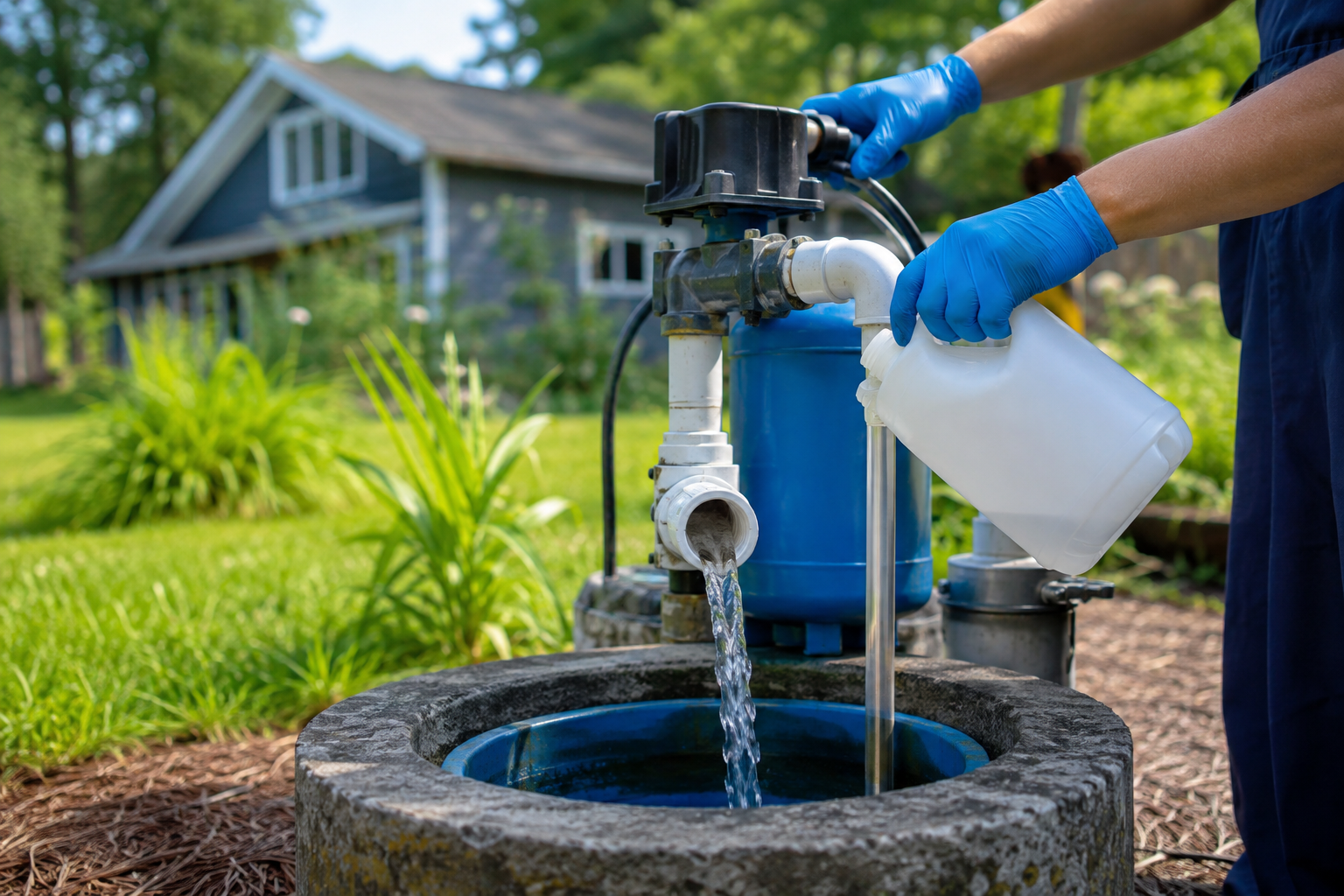
Professional well disinfection generally involves introducing an appropriate disinfecting solution into the well and water system. The solution needs enough contact time to work throughout the system.
The exact process can vary depending on the well construction, plumbing layout, pump system, and reason for treatment.
After treatment, the system may need to be flushed according to appropriate procedures. Follow-up water testing can then help determine whether the treatment was successful.
Because private wells are part of a larger water system, simply treating one part may not solve an ongoing contamination problem. If bacteria continue to appear in tests, the well should be inspected for possible entry points or other problems.
Why Professional Disinfection Can Be Helpful
Well disinfection may sound like a simple do-it-yourself task, but mistakes can create problems. Using the wrong amount of disinfectant, failing to circulate it properly, or flushing the system incorrectly can reduce the effectiveness of the treatment.
Professional Durham NC Well Disinfection services can help homeowners approach the process carefully. A qualified technician can assess the well, consider the reason for contamination, perform appropriate treatment, and recommend follow-up testing when needed.
Professional service can be especially useful when contamination is recurring or when the well has experienced flooding or major repairs.
Well Disinfection Is Not a Permanent Solution
One important thing for homeowners to understand is that disinfection does not necessarily prevent future contamination.
If bacteria return after treatment, there may be an underlying issue with the well or surrounding property. Possible concerns can include damaged well components, poor drainage, surface water entering the well, or problems with the well cap or casing.
In these situations, repeating disinfection without finding the cause may only provide a temporary improvement.
Regular inspections and water testing can help identify problems before they become larger concerns.
How Often Should You Test Your Private Well?
Well testing and well disinfection work together. Testing provides information about water quality, while disinfection may be used when contamination is found or when certain well work has been completed.
Many private well owners choose to test their water regularly and also test after events that could affect water quality. These events can include flooding, repairs, changes in water appearance, or suspected contamination.
The appropriate testing schedule can depend on local conditions and the individual well. Homeowners should follow recommendations from qualified water professionals and applicable local or state guidance.
Protecting Your Private Well
Good well maintenance can reduce the chance of contamination. Homeowners can take several simple steps to protect their water supply.
Keep the area around the well clean and properly drained. Avoid storing chemicals, fuel, fertilizers, or waste close to the well. Make sure the well cap and visible components remain in good condition.
It is also important to pay attention to changes in water quality. If your water suddenly looks different, develops an unusual odor, or produces unexpected results on a water test, do not ignore the issue.
Testing can help determine what is happening before you decide on a treatment.
When to Call a Professional
If you are unsure whether your private well needs disinfection, a professional evaluation can be a good starting point. This is particularly important after flooding, well repairs, a failed bacterial test, or other events that could affect your water supply.
A professional can help determine whether disinfection is appropriate and whether additional inspection or testing is needed.
For homeowners searching for Durham NC Well Disinfection, choosing an experienced well service provider can make the process easier and safer.
Final Thoughts
So, how often should you disinfect a private well in Durham, NC? In most cases, disinfection should not simply be performed on a fixed schedule without a reason. It is more important to monitor your well, test the water regularly, and disinfect the system when contamination, repairs, flooding, or other conditions make treatment appropriate.
Regular maintenance and timely testing can help you better understand your well water and protect your household water supply. If you suspect bacterial contamination or have recently completed well repairs, professional Durham NC Well Disinfection can be an important part of restoring proper water system maintenance.
 Arbor Plumbing